
I Built an AI Expert Site —It Took Google 6 Months to Catch It
How to Create Perfect Structured Data for Google
Schema Markup Mistakes That Hurt SEO Rankings — And How to Fix Every One
Is the Google Indexing API Free? 2026 Pricing, Quota Limits & Hidden Costs Explained

IndexNow doesn’t index your Google results.
Here’s what actually does.
The most confused topic in technical SEO right now: two tools with overlapping names, completely different jobs, and one of them can’t even talk to Google. This is the full breakdown — no fluff, no affiliate padding.
The ProblemYou’re running two indexing tools. One of them can’t see Google.
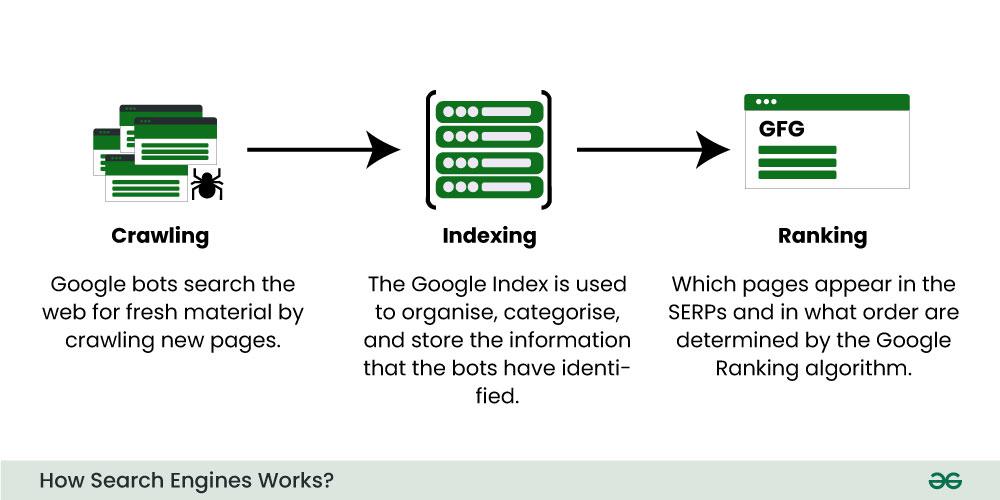
The confusion starts with the word “indexing.” Both IndexNow and Google Search Console are described, marketed, and discussed as “indexing tools.” They are not the same kind of tool. One is a push notification protocol that broadcasts URL changes to participating search engines. The other is a direct interface with Google’s crawl and index infrastructure, plus a full analytics dashboard on top.
As of June 2026, Google does not support IndexNow. That sentence has been true since IndexNow launched in 2021. It remains true. You can send 10,000 IndexNow pings a day and Google will not receive a single one. Google’s own developer documentation on crawl budget management does not mention IndexNow anywhere — because IndexNow is not a Google product, not a Google partner protocol, and not something Googlebot listens to.
The practical consequence: if your site’s primary traffic source is Google — which describes the majority of English-language commercial sites — then IndexNow directly affects zero percent of your Google visibility. It still matters, just not for what most people think it does.
That said, dismissing IndexNow entirely because Google hasn’t adopted it is also wrong. The non-Google search ecosystem is real, it’s growing (particularly for AI-adjacent discovery via Bing’s integration with Copilot and ChatGPT retrieval), and IndexNow’s setup cost is low enough that the question isn’t “should I?” but “why haven’t I already?”
IndexNowWhat it actually does — and what it doesn’t guarantee
IndexNow is an open-source push protocol co-developed by Microsoft Bing and Yandex, publicly launched in 2021. The core idea is simple: instead of waiting for search engine crawlers to discover new or updated URLs on their own schedule, you send a lightweight HTTP notification the moment content changes. One ping to one participating engine gets shared across all participants in the consortium.
The technical setup (it’s genuinely simple)
Setup is a one-time 20-minute job. Generate an API key, place a text file with that key at your domain root (e.g. https://yourdomain.com/yourkey.txt), then configure your CMS or deployment pipeline to POST to the IndexNow endpoint when a URL changes. That’s it. WordPress has at least four mature plugins that automate this. Cloudflare offers native IndexNow support as part of its Workers integration. Shopify, Wix, and Squarespace have baked it in natively.
What “notified” actually means
This is where the marketing language around IndexNow gets sloppy. IndexNow tells Bing and friends that a URL deserves a look. It does not guarantee indexing. The receiving engine still applies its own quality signals — thin content, robotted pages, crawl errors, domain authority — before deciding whether to actually store the page in its index. A low-quality page pinged via IndexNow gets rejected just as fast as one Bingbot found organically. The protocol accelerates discovery, not approval.
Google Search ConsoleIt’s not an indexing tool. It’s a diagnostic system that has an indexing request feature.
The category error most people make: they treat GSC as a submission tool with extra reporting bolted on. That’s backwards. Google Search Console is primarily a diagnostic and analytics platform. The URL inspection / request indexing feature is one small function in a much larger system — and Google is explicit that it does not guarantee indexing, and that repeatedly requesting the same URL accomplishes nothing.
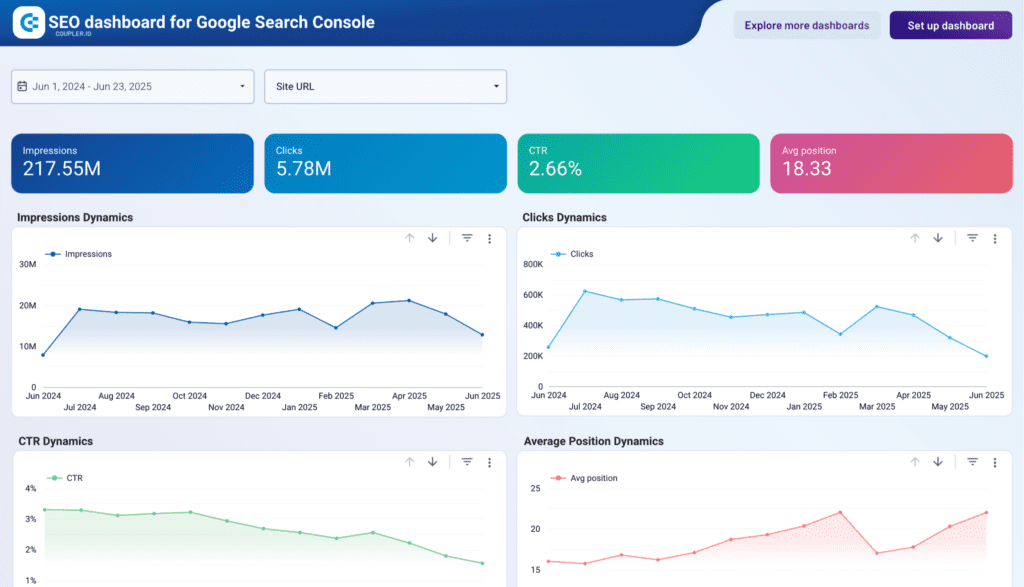
What GSC actually does well: it shows you why Google has or hasn’t indexed your content. That diagnostic function is what makes it irreplaceable, and it got significantly more useful in late 2025.
What changed in late 2025 and early 2026
Google’s November 2025 GSC update introduced two features that are genuinely useful for diagnosing indexing problems. First, the Coverage report now surfaces sub-reasons inside the “Crawled – currently not indexed” bucket. Before November 2025, you got that status and had to guess whether the issue was thin content, low-quality signals, or insufficient unique content. Now GSC tells you which it is. This alone saves hours of guesswork for anyone managing sites above 500 pages.
Second, query segmentation: branded versus non-branded traffic is now filterable natively, without regex workarounds or exporting to a spreadsheet. If you’ve ever spent 20 minutes building a GSC filter to isolate branded queries, you know how long this was overdue.
“The most useful GSC diagnostic in 2026 isn’t the URL Inspection tool — it’s the indexed-to-submitted ratio trend line. A declining ratio over 60 days is an early warning signal for either content quality deterioration or crawl budget problems. By the time the traffic drop shows up in GA4, you’ve already lost 3-6 weeks of ground.” — Practical interpretation; the data structure is described in Google’s Search Console documentation.
The URL Inspection tool — what “Request Indexing” actually does
Clicking “Request Indexing” in GSC tells Google you believe this URL is worth a crawl sooner than scheduled. Google’s own documentation is clear: this adds the URL to a priority queue, but it does not guarantee crawling or indexing, and repeated requests for the same URL after 48 hours return the same result as the first one. The practical effective limit is roughly 10-15 URLs per day for this to have any meaningful effect. For content migrations or site relaunches, this tool is useful. For publishing routines on established sites, it is largely redundant with proper XML sitemaps and strong internal linking.
ComparisonThe actual differences — what each tool controls, what it doesn’t
| Dimension | IndexNow | Google Search Console |
|---|---|---|
| Primary function | Push notification protocol for URL changes | Diagnostic platform + Google-specific indexing tools |
| Google support? | ✗ Not supported. Google is not in the consortium. | ✓ Google’s own product. Direct link. |
| Engines covered | Bing, Yandex, Naver, Seznam, Yep, and growing list | Google only |
| Indexing guarantee | ✗ Discovery only. Quality gates still apply. | ✗ No tool guarantees Google indexing. |
| Speed of action | Near-instant notification (minutes) | Request queued; typically crawled within hours to days |
| Diagnostic capability | ✗ Tells you nothing. Fire-and-forget. | ✓ Detailed reasons for non-indexing, crawl stats, errors |
| Performance analytics | ✗ None | ✓ Full click / impression / CTR / position data |
| Schema / structured data | ✗ Not involved | ✓ Rich result errors, enhancement reports |
| Core Web Vitals | ✗ Not involved | ✓ Field data via CrUX, page group breakdown |
| Crawl budget data | ✗ None | ✓ Crawl stats report, Googlebot activity |
| Manual actions / penalties | ✗ None | ✓ Full manual action log + reconsideration |
| Setup complexity | Low — 20 minutes, file placement + API key | Medium — DNS/HTML verification required, property setup |
| Cost | Free | Free |
| API access | Open REST API, no rate limits documented | GSC API v2 (2026 expansion) — structured data and performance access |
| AI search relevance | ~ Indirect — via Bing’s Copilot / GPT retrieval pipeline | ~ Indirect — Google AI Overviews pull from indexed content |
| CMS native support | WordPress, Shopify, Wix, Cloudflare, Squarespace | All major CMS via site verification; no “submission” plugin needed |
| Bulk URL handling | Up to 10,000 URLs per API request | Sitemap submission (unlimited); URL inspection: ~10–15/day practical limit |
The Hard PartNeither tool solves the actual Google indexing problem. Here’s what does.
Here’s what most guides on this topic won’t say: the most common reason your pages aren’t indexed isn’t a lack of pinging or submitting. It’s that Google evaluated the content and made a decision not to index it. That decision is based on quality signals, crawl budget allocation, and site authority — none of which IndexNow touches, and only one of which GSC helps you diagnose rather than fix.
In 2026, Google’s crawlers are more selective than at any previous point. Google’s own crawl budget documentation explains that crawl capacity is calculated dynamically based on server response speed, server error rates, and crawl health signals. Slow servers don’t just index slowly — they get a reduced crawl allocation that takes weeks to recover.
The crawl budget problem is particularly acute for sites in 2026 that have accumulated large volumes of low-quality or near-duplicate content — either from AI generation pipelines running without editorial review, or from legacy CMS setups with faceted navigation generating thousands of near-duplicate URLs. One practitioner report cited fixing faceted navigation on an e-commerce site that had 50,000 product pages — 40% of the crawl budget was going to navigation filter pages no human ever visited. After fixing robots.txt exclusions and canonicalization, indexing speed on actual product pages increased by 65% in six weeks.
That kind of fix doesn’t require IndexNow or GSC’s URL inspection tool. It requires crawl log analysis and understanding how Google allocates budget — information GSC’s crawl stats report surfaces, but doesn’t resolve on its own.
Decision FrameworkWhat to actually run, and when
The answer for most sites isn’t “IndexNow or GSC” — it’s a layered approach where each tool handles what it’s actually designed for. Here’s how to think about it by site type:
Which indexing approach fits your situation?
Use IndexNow when…
Content changes frequently, time-to-index on non-Google engines affects revenue (price changes, breaking news, product launches). Setup is free and takes under an hour via WordPress plugin or Cloudflare. Already supported natively on Shopify, Wix, Squarespace.
Use GSC when…
Always. There is no scenario where GSC is optional for a site that cares about Google performance. It is the only tool that shows you how Google actually sees your content, what errors are blocking indexing, and whether your crawl budget is being wasted.
What neither tool does
Neither tool improves content quality, earns backlinks, fixes crawl budget waste, or repairs broken internal linking. These are the actual variables that determine whether Google indexes and ranks your content. Both tools surface problems. Neither one solves them.
2026 ContextWhere AI search changes the indexing calculus
AI Overviews appear in approximately 55% of Google searches as of March 2026. That changes the value of being “indexed” — because being indexed no longer automatically means being visible. AI Overviews pull primarily from content that Google’s systems have already evaluated as authoritative and well-structured. Getting indexed is now a prerequisite, not an outcome.
For Bing’s side: Copilot and the ChatGPT retrieval pipeline (which routes through Bing for real-time web results) do consume freshly indexed content. This is the actual argument for IndexNow beyond just “Bing traffic.” If your content is time-sensitive — a product announcement, a market update, an industry analysis — getting it into Bing’s index within minutes rather than days means it’s available for Copilot retrieval before your competitors. That’s a real competitive window, if a narrow one.
The GSC side of this: Google’s November 2025 update made the “Crawled – not indexed” sub-reasons more specific. One sub-reason is now “low quality signals” specifically — which is the algorithmic equivalent of Google telling you the content exists but doesn’t meet the threshold for AI Overview consideration. Fixing content flagged with this sub-reason is now directly connected to AI visibility, not just traditional organic ranking.
One thing nobody discusses: effective technical SEO in 2026 requires understanding that the “indexing” question and the “AI visibility” question are now partially separate problems. A page can be indexed by Google but excluded from AI Overviews. A page can be pinged via IndexNow and be available for Bing Copilot retrieval without ever ranking in traditional Bing search results. These are different layers of the same system.
ImplementationThe actual setup — no fluff, specific actions
IndexNow: get it running in under an hour
- Generate an API key at indexnow.org — it’s a random alphanumeric string, 8–128 chars
- Create a text file named
[yourkey].txtcontaining only your key, placed at your domain root - Configure your CMS/deployment to POST to
https://api.indexnow.org/indexnowon publish/update - On WordPress: Rank Math, Yoast SEO (premium), or the standalone IndexNow plugin handle steps 1–3 automatically
- Verify: use the Bing URL Inspection tool in Bing Webmaster Tools — you should see last ping time within minutes
Google Search Console: the non-obvious setup steps most people skip
- Verify via DNS TXT record (more stable than HTML meta tag verification, survives theme changes)
- Add both
https://andhttps://www.as separate properties (or use Domain Property to cover all) - Submit your XML sitemap under Indexing → Sitemaps — check for errors, not just confirmation
- Set up a Looker Studio dashboard with: indexed/submitted ratio trend, CWV by page group, CTR opportunity filter (impressions >500, CTR <3%)
- Check Enhancements → Structured Data weekly — schema errors after a CMS update are the most common silent indexing blocker
- Monitor Manual Actions monthly — the November 2025 update added schema violation as a distinct manual action type
Crawl budget cleanup: the ignored step that matters most
- Use GSC’s crawl stats report to identify which URL types Googlebot visits most vs. which convert to indexing
- Block faceted navigation, session parameters, and filter URLs via robots.txt if they generate duplicate content
- Ensure every important page is within 3-4 clicks from the homepage via internal linking
- Eliminate redirect chains — A→B→C should become A→C
- Target LCP under 2.5s, INP under 200ms, CLS under 0.1 — these directly affect Googlebot crawl frequency allocation
The question this guide can’t answer for you
Whether your pages get indexed consistently in 2026 depends almost entirely on whether Google considers them worth indexing — and that decision is made by quality signals that no protocol, tool, or plugin influences. IndexNow and GSC are both genuinely useful for what they do. The mistake is expecting either one to compensate for content that doesn’t meet the bar.
There’s one scenario where IndexNow’s Google non-support might actually change: if Google ever adopts the protocol (they tested it at some unspecified point and stepped back), every site already set up with it gets an immediate advantage. The setup cost is low enough that this is the one SEO “hedge bet” that has no real downside. But that’s a future possibility, not 2026 reality.
What’s genuinely different in 2026 compared to 2023: being indexed is increasingly necessary but not sufficient. AI Overviews, Copilot retrieval, and zero-click results mean that content must be indexed and evaluated as authoritative to generate any traffic. Both tools help you get to indexed. Neither one gets you past the authority threshold. That work happens in the content itself — and the only tool that tells you how you’re doing on that front is the performance tab in GSC, and the traffic trend that follows 4-6 weeks after a content change.
IndexNow in 2026: The Indexing Protocol That Quietly Became a Backdoor Into ChatGPT