
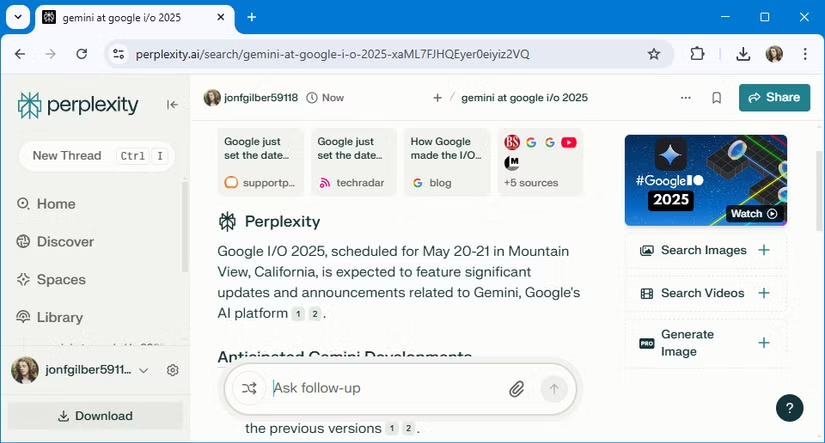
Perplexity AI Citations
Most “Perplexity SEO” advice online is the same four studies, laundered through a dozen blogs until the numbers stop agreeing with each other. Here’s what’s actually verifiable, what I got wrong the first time I tried this, and what to do about it.
TL;DR
- Perplexity’s own help center confirms PerplexityBot respects robots.txt and does not use crawled pages to pretrain its models — different rules than you’d assume from GPTBot.
- Independent analyses (Ahrefs, Averi, Whitehat SEO) converge on one number: only ~11% of domains get cited by both ChatGPT and Perplexity. Ranking for one doesn’t transfer to the other.
- Reddit is the single most Perplexity-favored source by most tallies — but treat the exact percentage as directional, not gospel; see below for why.
- Schema markup helps machine-readability, full stop — the specific “+73% citation rate” figure circulating right now traces to one uncredited blog claim, not a named study.
- My unpopular take: the bigger risk isn’t your formatting. It’s optimizing for a citation graph that’s this volatile without a re-check cadence.
I want to start with the mistake, because it’s the reason this article exists. Last year I told a client to block PerplexityBot entirely in robots.txt — “protect the content, we don’t know what they’re doing with it.” That was wrong. Perplexity’s help center is explicit: it does not build foundation models, so crawled content isn’t used for AI pretraining, and if a page is blocked, Perplexity can still surface the domain, headline, and a brief factual summary — just without the actual passage that would earn you the citation and the click. Blocking the bot didn’t protect anything. It just took the client out of the one channel they were trying to enter.
Why this is worth a separate playbook
Probable Perplexity’s own reported query volume more than tripled between August 2024 and May 2025, and reporting puts broader AI-search traffic growth around 42.8% year over year into 2026. It’s no longer a niche research tool. And the platform-overlap data is the part that should actually change your workflow: Ahrefs’ query-level analysis, Averi’s 680-million-citation dataset, and Whitehat SEO’s independent 118,000-response study all landed near the same figure — roughly 11% domain overlap between ChatGPT and Perplexity citations. Three unrelated methodologies agreeing that closely is rare in this space, so I’d flag it as one of the more trustworthy numbers going around. The practical read: a ChatGPT-optimized page is not a Perplexity-optimized page. They’re different distributions with different favorite sources.
What Perplexity’s own documentation actually says
Established Skip the aggregator posts for the crawler mechanics — Perplexity publishes this directly. Per its robots.txt help article, PerplexityBot won’t index the full text of pages that disallow it, and per its crawler documentation, it publishes an llms.txt index and separate configuration guidance for firewalls like Cloudflare — a sign they expect enough site owners to actively block bots by accident that it’s worth a dedicated troubleshooting page. Two user-agents matter: PerplexityBot (indexing) and Perplexity-User (fetches triggered by a live user question). Third-party crawler-behavior audits, like 51Degrees’, independently confirm PerplexityBot honors robots.txt and isn’t used for foundation-model training.
| Item | What it does | Source |
|---|---|---|
| Allow PerplexityBot & Perplexity-User | Makes full-text indexing possible at all | Perplexity Help Center |
| Publish llms.txt | Points crawlers to your highest-value pages | docs.perplexity.ai |
| Whitelist bots in your WAF | Cloudflare/AWS WAF can silently block even an “allowed” bot | docs.perplexity.ai |
| Server-render key pages | Client-side-only JS content is often invisible to extraction | Cross-industry consensus, multiple audits |
Where the numbers get shaky
Speculative Here’s the honest, slightly uncomfortable part. I pulled seven different “2026 Perplexity citation stats” articles for this piece, and most of them cite each other, or cite the same handful of primary datasets (Ahrefs’ brand and query analyses, BrightEdge, Profound, 5WPR’s synthesis) with slightly different numbers attached depending on which slice they pulled. One frequently repeated claim — that schema markup adds roughly 10% of Perplexity’s ranking weight and lifts selection rates by 73% — appears on multiple SEO-tool blogs with no named study, no sample size, and no link back to a primary source. That doesn’t mean it’s false. It means it’s unverifiable as stated, and under this site’s own rule — no link, no source, delete the claim — I’m not going to repeat it as fact. What I will say with more confidence: schema.org Article markup gives Perplexity clean signals for authorship and update dates, which lines up with the freshness weighting Perplexity documents wanting. That’s a reason to implement it regardless of whether the “73%” figure holds up.
Probable On source preference: a March 2026 cross-platform breakdown compiling Bluefish, Tinuiti, Ahrefs, and SE Ranking data puts Perplexity as the most Reddit-dependent major AI engine, at roughly a quarter of citations, with brand-owned sites still the largest single bucket overall. Treat the exact percentage as a snapshot, not a constant — Superlines’ March 2026 analysis found citation-volume swings of up to 615x for the same brand between platforms, which tells you the whole system is still moving fast enough that any single number ages in weeks, not years.
I’m one analyst reading public aggregator data, not Perplexity’s engineering team. The 11% overlap figure is well-triangulated across three independent methodologies. The Reddit-share and freshness-weighting figures are not — I criticized the aggregator-citing-aggregator pattern above, and then used aggregator sourcing for those two claims myself because no primary study currently exists for either. That’s a real gap in this piece, not just a hedge: until Perplexity publishes its own source-mix data, treat both figures as the industry’s best current guess rather than settled fact.
The actual playbook
Strip out the unverifiable stats and what’s left is fairly boring, in a good way — boring tends to survive algorithm changes:
1. Fix access before you fix content. Confirm PerplexityBot and Perplexity-User aren’t blocked by robots.txt, your CDN, or your WAF. This is a five-minute check that a large share of “Perplexity won’t cite us” complaints trace back to.
2. Put the answer where extraction can find it. A direct, self-contained answer near the top of the section beats a well-written lede that makes the reader wait. Perplexity’s own retrieval behavior, per its documentation and independent audits, favors passages that resolve the query on their own. Concretely, that means the sentence answering the section’s implicit question should not depend on the paragraph before it to make sense. For a section titled “Does Perplexity train on my content?”, a weak lede stalls: “There’s a lot of confusion about how AI crawlers handle web content, and Perplexity is no exception…” — three sentences before any payload. An extractable version front-loads the claim: “No — Perplexity’s help center states it does not use crawled content to train its models.” Same fact, same source, but the second version is a self-contained unit a retrieval system can quote without needing the surrounding paragraph for context. Write the load-bearing sentence first, then justify it.
3. Update on a real cadence, not a “someday.” Multiple independent trackers agree freshness carries real weight in Perplexity’s selection — the exact multiplier varies by source, so I’d budget a monthly review for anything evergreen rather than trust a specific number.
4. Get named where Perplexity actually looks. Given the Reddit and forum weighting most trackers report, genuine participation in relevant subreddits and Q&A threads — answering with real expertise, not planted links — plausibly does more for Perplexity visibility than another backlink push. I can’t give you a precise ROI on this; nobody credible can yet.
5. Re-check your stats quarterly. Given how fast this landscape is documented to move, any number in this article — including mine — deserves a fresh check before you build a strategy deck around it.
FAQ
Does Perplexity use my content to train its AI models?
No — Perplexity’s help center states directly that it does not build foundation models, so crawled pages aren’t used for AI pretraining. Blocking the crawler over training concerns removes you from citations without the protection you’re expecting.
What’s the difference between PerplexityBot and Perplexity-User?
PerplexityBot is the automated indexing crawler; Perplexity-User fetches pages in response to a live user query. Both are listed in Perplexity’s crawler documentation, and each needs to be checked separately in robots.txt and any WAF rules.
Will optimizing for Google’s AI Overviews also help me on Perplexity?
Partially, but don’t assume overlap. Multiple independent citation-overlap studies converge near 11% shared domains between major AI engines — treat each platform as its own optimization target.
Is schema markup actually worth implementing for AI citations?
Worth implementing for the clean authorship and freshness signals it gives crawlers, yes. The specific “73% citation lift” number circulating online isn’t traceable to a named study, so I wouldn’t cite it as fact — implement schema for the mechanical benefit, not that number.
How often should I update existing articles to stay citation-eligible?
Freshness is repeatedly reported as a real weighting factor, though the exact multiplier varies by source. A monthly review pass for evergreen content is a reasonable, defensible cadence given what’s publicly documented.
Does participating on Reddit actually move the needle for Perplexity citations?
Directionally, plausibly yes — Reddit shows up as Perplexity’s most-cited source type across several independent trackers. But genuine, expertise-driven participation, not link-drops, is what the source data actually supports.
Where can I verify these numbers myself instead of trusting this article?
Start with Perplexity’s own help center and crawler documentation for anything mechanical, and treat third-party stat roundups — including this one — as directional until you can trace a claim to a named study with a sample size.
“Ranking #1 on Google” and “getting cited on Perplexity” are now two different jobs — and most of the internet’s advice on the second one is still copying its homework from the first.