
The Zero-Click Search Guide: How to Win When Nobody Clicks
Over 80% of Google searches now end without a single click to any website. This guide explains exactly why that happened, what every SERP feature means for your traffic, and the precise strategies that keep your brand winning visibility even when users never leave Google.
2026 Snapshot
What Is a Zero-Click Search?
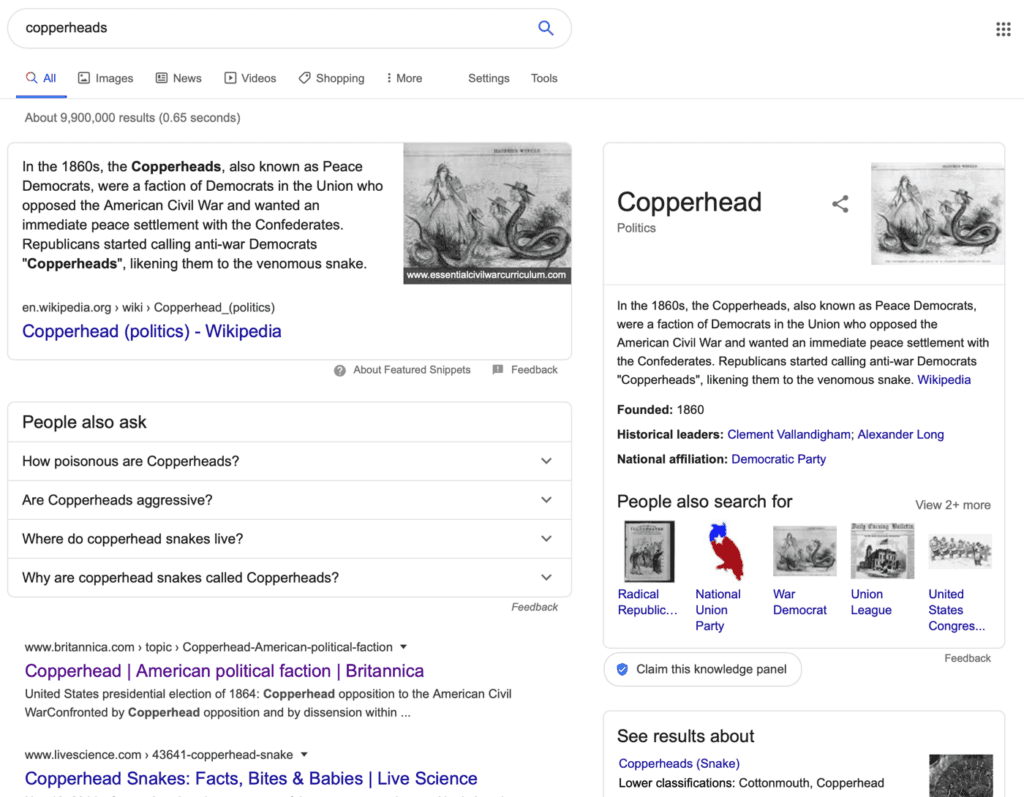
A zero-click search happens when someone types a query into a search engine, receives an answer directly on the search results page, and never clicks through to any external website. The SERP itself has become the destination.
Type “15 USD to EUR” into Google and you get a live currency widget. Ask “how many calories in an avocado” and a nutritional panel fills the screen. Search “capital of Brazil” and a knowledge card answers instantly. In each case, Google has solved the problem before any website gets the chance.
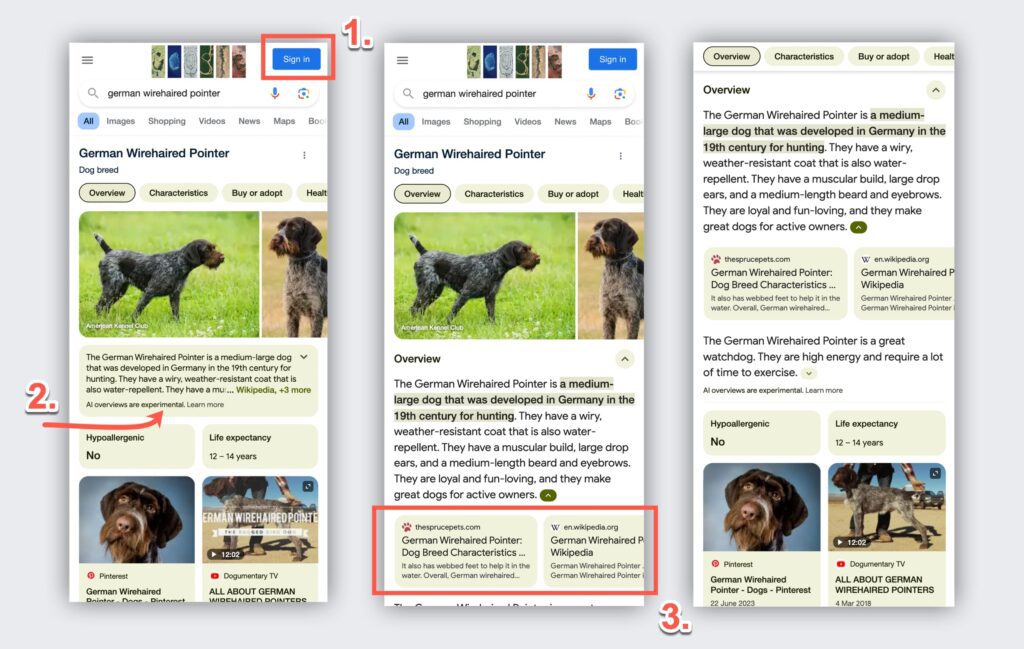
This was once a curiosity, a clever trick for simple factual queries. It is now the dominant mode of search. And with the arrival of AI Overviews — Google’s generative summaries that synthesize information from dozens of sources into a single, comprehensive answer — the phenomenon has accelerated far beyond anything the industry anticipated.
Understanding this distinction matters enormously. The response to zero-click searches cannot be “rank higher.” It must be “become the source that powers the answer.”
Why It Exploded Right Now
Zero-click behavior existed from the moment Google introduced instant answer boxes in 2012. But the scale of today’s phenomenon is a product of four forces converging simultaneously.
1. AI Overviews Changed the Ceiling
When Google launched AI Overviews (AIO) broadly in May 2024, it fundamentally changed the upper bound of what a SERP could answer. Where a featured snippet might handle a definition or a simple “how to” sequence, an AI Overview can respond to complex, multi-part research queries with synthesized, multi-paragraph answers drawn from across the web. The share of queries triggering AI Overviews jumped from 6.49% in January 2025 to 13.14% in March 2025 — a near-doubling in just two months — and has continued to expand since.
2. User Behavior Adapted to Speed
Today’s searcher is not the same person who patiently opened eight browser tabs in 2010. Mobile internet, instant-load pages, and years of conditioning by apps that surface the right answer immediately have created a user who expects resolution within seconds. When Google provides that resolution on the results page, the motivation to click elsewhere largely disappears.
3. Google’s Commercial Incentive
Keeping users within the Google ecosystem means more ad impressions, more engagement with Google Shopping, Google Flights, Google Hotels, and Google’s own products. Every zero-click interaction is a transaction that never reaches a third-party website — but does serve Google’s business interests. This is not a conspiracy theory; it’s a business model, and it’s working.
4. Voice and AI-Native Search
Voice assistants return a single spoken answer with no URL to click. ChatGPT, Perplexity, and Gemini synthesize information and present it conversationally, typically without prominent clickable links. As these platforms absorb more search volume, the entire definition of a “search” is shifting away from the click-based model that the web industry was built around.
“The search results page is no longer a gateway — it’s the destination.”— Limor Barenholtz, Director of SEO & GEO, Similarweb (May 2025)
Every SERP Feature Explained
Zero-click searches are delivered through a specific set of SERP features. Each one operates differently, targets different query types, and presents a different optimization opportunity.
Not All Features Are Equal
The most important distinction to make when building a zero-click strategy is between features that attribute your brand and features that don’t. Featured snippets, AI Overview citations, and PAA results all name the source and provide a link. Direct answer boxes and Knowledge Graph answers do not. Your optimization energy should concentrate on the attribution-bearing features, where visibility genuinely translates into brand recognition and downstream traffic.
The Data: How Bad Is It?
| Metric | Value | Source | Year |
|---|---|---|---|
| U.S. searches ending without any click | 58.5% | SparkToro / Datos / Semrush | 2024 |
| EU searches ending without any click | 59.7% | SparkToro | 2024 |
| Global searches ending without a click | ~60% | SparkToro | 2024 |
| Mobile zero-click rate | >75% | Multiple studies | 2025 |
| Zero-click rate: AIO queries | ~83% | BrightEdge / Semrush | 2025 |
| Share of queries with AI Overviews (U.S. desktop) | 13.14% | Semrush | March 2025 |
| Share of queries with AI Overviews (Jan 2025) | 6.49% | Semrush | Jan 2025 |
| CTR decline with AI Overview present | −34.5% to −61% | Ahrefs / Seer Interactive | 2024–2025 |
| News search zero-click rate (May 2025) | 69% | Industry analysis | 2025 |
| PAA feature present in SERPs | 78% | Search Engine Land | 2025 |
| Organic clicks per 1,000 U.S. searches | 360 | SparkToro | 2024 |
These figures tell a coherent story: search engines have become increasingly self-sufficient at answering user queries. The trend has not plateaued. It is accelerating. Every expansion of AI Overviews into new query types, new geographies, and new devices represents another tranche of previously-clickable traffic being absorbed into the SERP itself.
Who Gets Hit Hardest
Zero-click searches do not affect all content types equally. The impact is strongly correlated with query intent.
| Content / Query Type | Zero-Click Risk | Why |
|---|---|---|
| Informational / definitional | Very High | AI Overviews and featured snippets fully satisfy these queries |
| News / current events | Very High | Top Stories carousel and AI summaries absorb most engagement |
| Simple how-to queries | High | Step-by-step AI Overviews replace article visits |
| Local search | High (for clicks) | Local pack drives calls and directions, not web visits |
| Comparison / best-of | Medium | AI summarizes, but users often click to verify or purchase |
| Transactional / purchase intent | Lower | Users need to complete the transaction; clicks remain high |
| Branded queries | Lower | Users specifically seeking your brand navigate directly |
| Complex research / proprietary data | Lowest | AI cannot fully synthesize deep or unique expertise; clicks follow |
Publishers and news organizations have absorbed the deepest losses. Ad-supported content businesses whose revenue model depends on page views are existentially threatened when 69% of their query category ends without a click. SaaS companies face a different but serious challenge: their traditional “how-to” content pillars — historically their strongest organic traffic drivers — are now among the most susceptible to AI summarization.
E-commerce, local service businesses, and brands with strong proprietary data are relatively better positioned — but none are immune.
The Hidden Opportunity Inside Zero-Click
Here is the contrarian truth that most zero-click analysis misses: being cited inside an AI Overview or featured snippet makes users more likely to click on your brand afterward, not less.
Research confirms that brands cited as sources in AI Overviews receive measurably more organic clicks than competitors who are not cited. The mechanism is trust: when Google’s AI recommends your brand as a source, users who do click are more likely to convert, more pre-qualified, and more likely to remember the brand. The SERP has become a top-of-funnel touchpoint, not a dead end.
- AI citation builds brand authority at scale
- Featured snippets = free brand exposure on position zero
- PAA creates infinite discovery loops for your expertise
- Local pack generates calls and footfall without website visits
- Zero-click impressions influence purchase decisions upstream
- AI-referred traffic converts 3× better (HubSpot data)
- Knowledge panels build long-term entity authority
- Organic CTR down 34–61% on AIO queries
- Traditional traffic metrics misrepresent brand health
- Ad revenue models tied to page views are structurally broken
- Attribution is hard — zero-click value is invisible to GA4
- Direct-answer boxes give no credit to your content at all
- Google’s incentives are misaligned with publisher interests
Answer Engine Optimization (AEO): The New Discipline
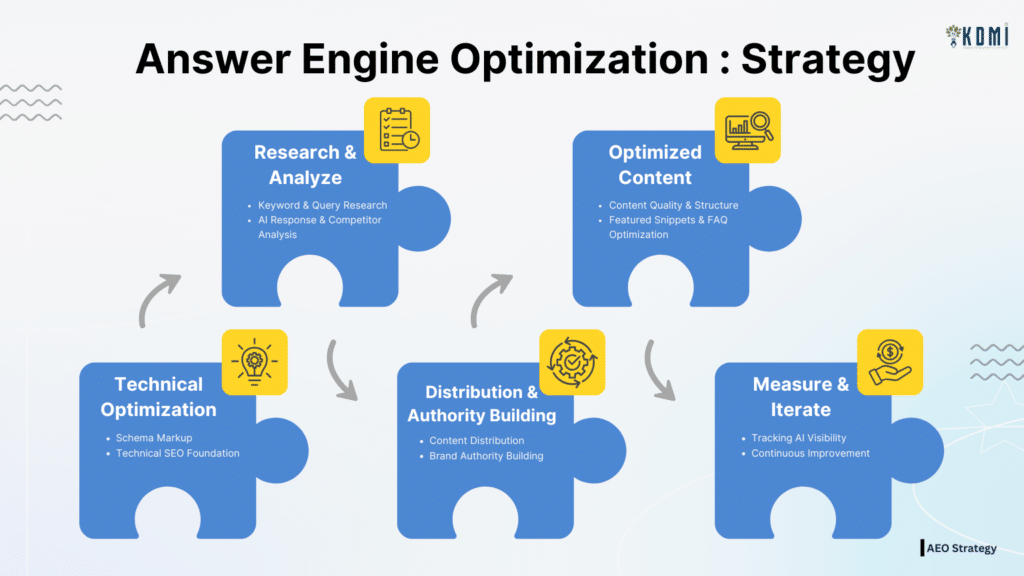
The industry has converged on a name for the strategic response to zero-click search: Answer Engine Optimization (AEO). It is not a replacement for SEO. It is its evolution.
Traditional SEO optimizes content to rank in search results, with success measured in clicks and traffic. AEO optimizes content to be the answer inside AI Overviews, featured snippets, voice assistants, and conversational AI platforms — with success measured in citations, mentions, brand visibility, and share of voice.
| Dimension | Traditional SEO | AEO / Zero-Click SEO |
|---|---|---|
| Primary goal | Rankings & clicks | Citations, mentions & brand visibility |
| Success metric | CTR, organic sessions, conversions | SERP feature share, AI citation rate, share of voice |
| Content format | Keyword-rich, long-form content | Question-first, concise answers + depth behind them |
| Technical focus | Core Web Vitals, backlinks, indexing | Schema markup, E-E-A-T signals, structured Q&A |
| Where it wins | Transactional & navigational queries | Informational, voice, and AI-native queries |
| Platforms | Google, Bing SERPs | Google AIO, ChatGPT, Perplexity, Gemini, voice |
The most sophisticated practitioners treat SEO and AEO as a single, unified strategy. Strong organic rankings feed AEO because AI systems rely on search indexes to find sources. Content that ranks well is content that gets cited. Authoritative, structured, E-E-A-T-compliant content serves both objectives simultaneously.
“AEO is the practice of optimizing to be the source that powers AI answers — not just the link that appears below them.”— Similarweb, AEO Complete Guide, March 2026
The 12-Step Strategy to Win Zero-Click Search
Audit Your Zero-Click Exposure First
Open Google Search Console and filter your queries by those with high impressions but declining CTR. These are your most exposed pages. Use Semrush’s Position Tracking to flag keywords that trigger AI Overviews or featured snippets. This gives you a prioritized hit list before you change a single word of content.
Separate Your Keywords by Intent
Zero-click risk is not uniform. Map every target keyword to one of four categories: informational (high risk), navigational (low risk), transactional (low–medium risk), or commercial investigation (medium risk). Informational content needs AEO treatment. Transactional content needs traditional conversion optimization. Mixing them up wastes resources on the wrong objective.
Structure Content in an “Answer First, Depth Second” Format
For every key question your content addresses, place a direct, complete answer within the first 40–60 words after the heading. This is what Google extracts for featured snippets and AI Overviews. Then follow with the nuance, caveats, examples, and proprietary insight that compels a click for anyone who wants more. The answer earns the SERP appearance; the depth earns the click.
Use Question-Based H2s and H3s Throughout
Rewrite your headings as the actual questions your audience types. “What is zero-click search?” outperforms “Definition.” “How do I optimize for featured snippets?” outperforms “Optimization Tips.” This aligns your content structure with the way Google extracts PAA answers and matches conversational AI query patterns, which average 23 words compared to traditional search’s 3.37.
Build Comprehensive FAQ Sections
An FAQ section at the end of every major content piece — or as standalone FAQ pages — creates dozens of extractable Q&A pairs in a single page. Target the “People Also Ask” questions that Google shows for your seed keywords. Treat each answer as a 50–80-word self-contained unit that works independently of the surrounding content.
Implement Schema Markup Systematically
Schema is the machine-readable layer that removes ambiguity about your content’s structure. Prioritize FAQPage, HowTo, Article (with author and organization data), and LocalBusiness schemas. JSON-LD format, placed in the page head, is the preferred implementation. This does not guarantee SERP feature inclusion, but it substantially reduces the friction that prevents it.
Build Entity Authority — Not Just Keyword Authority
AI systems retrieve content by entity relevance, not keyword density. Establish your brand as a recognized entity by maintaining consistent name, address, and contact data across all platforms; claiming and verifying your Google Business Profile and Knowledge Panel; building Wikipedia or Wikidata citations where appropriate; and ensuring your brand appears consistently across credible third-party sources.
Create Content That AI Cannot Fully Summarize
Proprietary data, original research, first-person experience, interactive tools, calculators, and case studies with specific numbers are extremely difficult for AI to replicate without a click. If your content contains something users can only get from you — a survey result, a pricing calculator, a dataset — AI summarization actually sends traffic to you, not away from you.
Optimize Your Google Business Profile Rigorously
For any business with a physical location or local service area, the GBP is your most powerful zero-click asset. Complete every field. Post weekly updates. Respond to every review within 24 hours. Add photos with keyword-rich alt text. Maintain consistent NAP data across all directories. A fully-optimized GBP generates calls, directions, and bookings from the Local Pack without users needing to visit your website.
Invest in Multi-Platform Presence
When ChatGPT, Perplexity, or Gemini answer a user’s question, they pull from the same signals that build authority in traditional search: links, mentions, citations, social media presence, and third-party coverage. Amplifying your best content on LinkedIn, Reddit, and relevant industry communities increases the probability of AI citation across all platforms simultaneously.
Demonstrate E-E-A-T at Every Level
Google’s E-E-A-T framework (Experience, Expertise, Authoritativeness, Trustworthiness) is the primary filter AI systems apply when deciding which sources to cite. Display author credentials, link to their professional profiles, cite primary sources for all statistics, include your methodology for original research, and earn editorial coverage in recognized industry publications. Trust signals are not decoration; they are the algorithm.
Track What Traditional Analytics Ignores
Your GA4 dashboard does not measure zero-click value. Supplement it with SERP feature share tracking (via Semrush or Ahrefs), brand mention monitoring (via Brand24, Mention, or SparkToro’s Followerwonk), AI citation tracking (via Similarweb AI Visibility or manually querying ChatGPT and Perplexity), and branded search volume trends. These signals reveal whether your zero-click strategy is working before revenue is affected.
Schema Markup Playbook
Schema markup is the single highest-leverage technical action you can take for zero-click optimization. Here is the JSON-LD implementation for the two most impactful schema types.
FAQPage Schema (highest priority for AEO)
"@context": "https://schema.org","@type": "FAQPage","mainEntity": [ { "@type": "Question", "name": "What is a zero-click search?", "acceptedAnswer": { "@type": "Answer", "text": "A zero-click search occurs when a user finds their answer directly on the search results page without clicking any external website. These are powered by AI Overviews, featured snippets, knowledge panels, and direct answer boxes." } }]Article Schema (E-E-A-T signals for AI citation)
"@context": "https://schema.org","@type": "Article","headline": "The Complete Zero-Click Search Guide","author": { "@type": "Person", "name": "Author Name", "url": "https://www.futurenow.click/author/"},"publisher": { "@type": "Organization", "name": "FutureNow", "logo": { "@type": "ImageObject", "url": "https://www.futurenow.click/logo.png" }},"datePublished": "2026-05-14","dateModified": "2026-05-14"Measuring Success Without Clicks
The zero-click era demands a new measurement framework. Click-based metrics are necessary but no longer sufficient. Here is the complete dashboard every SEO and marketing team should build.
| Metric | What It Measures | Tool |
|---|---|---|
| SERP feature share | % of target keywords where you appear in snippets, PAA, AIO | Semrush, Ahrefs |
| AI citation rate | How often your brand is cited in ChatGPT, Perplexity, Gemini responses | Similarweb AI Visibility, manual audits |
| Brand search volume | Branded query growth indicating zero-click driven brand recall | Google Search Console, Google Trends |
| Share of voice | Your brand’s visibility vs. competitors across all SERP features | Semrush, SparkToro |
| Impression-to-click ratio | Tracks the Great Decoupling — widening gap signals zero-click exposure | Google Search Console |
| Zero-click conversion assist | Multi-touch attribution showing organic assists to later conversions | GA4 (explore reports), Rockerbox |
| Brand mention sentiment | Quality and context of your brand’s appearance in AI answers | Brand24, Mention |
The formula for estimating zero-click value, even without direct measurement, is: Zero-Click Value = Impressions × Visibility Rate × Brand Recall Factor × Later Conversion Rate × Customer Lifetime Value. The numbers will be imperfect, but the framework forces your organization to acknowledge that zero-click visibility has real economic value — even when no click follows.
Real-World Cases
Case 1 — SaaS Brand: Impressions Double, CTR Halves
A mid-size SaaS company monitored Google Search Console from May 2024 (when AI Overviews launched) through September 2025. Total impressions more than doubled — their content was being surfaced more than ever. But the click-through rate fell from approximately 1.5% to under 0.5%. The response: they restructured their highest-exposure informational content to lead with 50-word answers, added FAQPage schema, and launched a proprietary benchmark report that AI tools cannot summarize without attribution. Within six months, they recovered 40% of lost organic visits while maintaining their expanded impression footprint.
Case 2 — Financial Services: The NerdWallet Pivot
NerdWallet shifted its editorial strategy toward ultra-specific, intent-clear financial questions with direct, expert-authored answers at the top of every article. Despite a documented decline in raw traffic, revenue rose 35%. The users who clicked were completing high-value financial products. The lesson: for high-intent verticals, the decline in informational traffic may actually improve conversion economics by filtering out low-intent browsers.
Case 3 — AEO Campaign: 40% More Zero-Click Appearances
An e-commerce brand executed a focused AEO campaign: conversational language throughout product descriptions, FAQ sections on every category page, FAQPage and Product schema, and structured data for voice search compatibility. Within three months, their appearances in zero-click answer boxes grew 40%, and brand mentions in AI-generated responses increased 25%. Downstream, their branded search volume — the clearest proxy for brand recall driven by zero-click exposure — rose 18% year-on-year.
Case 4 — Local Business: Zero-Click as Direct Revenue
A regional dental practice optimized its Google Business Profile fully: complete service listings, 200+ photos, weekly posts, direct responses to every review, and consistent NAP data across 40+ directories. The Local Pack appearances drove a 60% increase in “call” clicks and a 45% increase in direction requests — neither of which required a website visit. Revenue increased despite flat organic website traffic, demonstrating that zero-click can be zero-click-to-revenue for local businesses.
What’s Coming Next
The zero-click phenomenon is not a stable equilibrium. It is an accelerating transition. Here is where the evidence points over the next 12–24 months.
AI Mode and Search’s Full Generative Turn
Google is testing “AI Mode” — a fully generative search experience where the entire results page is replaced by an AI-generated response. If this rolls out broadly, the distinction between zero-click and click-based search will largely disappear. The SERP will be the answer engine, full stop. Your only option for visibility will be to be the cited source within AI responses.
Voice Commerce at $80 Billion
Voice commerce is projected to reach $80 billion by 2026. Smart speakers and voice assistants do not return URLs — they return answers. Optimizing for voice means optimizing for concise, authoritative answers that can be read aloud in under 30 seconds. Brands that win voice search win transactional zero-click interactions at scale.
AI Search Market Share Continues Fragmenting
Google’s worldwide search market share fell below 90% for the first time since 2015, according to multiple sources. Gartner projects traditional search engine volume will drop 25% by 2026 as users migrate to AI chatbots and virtual agents. ChatGPT referral traffic grew 123% between September 2024 and February 2025, making it the largest AI referral source for most websites. Visibility strategies that only target Google are already insufficient.
The E-E-A-T Arms Race
As AI generates more content and floods the web with generic information, genuinely expert, experienced, and authoritative human voices become exponentially more valuable to AI systems that need credible sources to cite. Original research, expert credentials, and first-person experience will command a premium they have never held before in the history of SEO.
Frequently Asked Questions
What is a zero-click search?
A zero-click search is a query where the user finds their answer directly on the search engine results page without clicking through to any external website. Google delivers these answers via AI Overviews, featured snippets, knowledge panels, PAA boxes, local packs, and direct answer boxes.
What percentage of Google searches are zero-click?
As of the most recent data (SparkToro/Semrush, 2024–2025): approximately 58.5% of U.S. searches and 59.7% of EU searches end without a click. For queries that trigger an AI Overview, the zero-click rate rises to approximately 83%. On mobile devices, the zero-click rate exceeds 75%.
Is SEO dead because of zero-click searches?
No. SEO and zero-click optimization are complementary, not contradictory. AI systems rely on Google’s search index to find content to cite. Strong organic rankings directly increase your probability of being cited in AI Overviews and other zero-click features. The most effective strategy combines traditional SEO for transactional queries with AEO (Answer Engine Optimization) for informational ones.
How do I rank in featured snippets?
Structure your content to answer the target question within the first 40–60 words after a relevant H2 or H3 heading. Use bullet points for list queries, tables for comparison queries, and numbered steps for how-to queries. Maintain strong overall page authority through backlinks and internal linking. You must already rank on page one — featured snippets are drawn from the top-10 results.
Do zero-click searches hurt all businesses equally?
No. Informational content, news publishers, and ad-revenue-dependent businesses are hit hardest. Transactional e-commerce, local service businesses, and brands with proprietary data are significantly less exposed. E-commerce brands benefit from zero-click impressions as top-of-funnel brand building while retaining clicks for purchase completion.
How do I measure zero-click ROI?
Track SERP feature share, brand search volume growth, AI citation frequency, share of voice, and multi-touch conversion attribution in GA4. The formula: Zero-Click Value = Impressions × Visibility Rate × Brand Recall × Later Conversion Rate × Customer Value. Supplement Google Search Console with tools like Semrush’s AI visibility features and brand monitoring platforms.
Should I optimize for AI Overviews differently than featured snippets?
The optimization principles overlap significantly: clear structure, direct answers, E-E-A-T signals, and schema markup serve both. AI Overviews draw from multiple sources rather than a single page, so comprehensive topic coverage and strong entity authority across your domain matter more for AIO than for individual featured snippet bids. Targeting longer, conversational 8-plus-word queries increases your AIO exposure.
SEO Requires C-Level Authority
Why AI-Generated Medical Content Is Outranking Real Hospitals