
SEO DiagnosticsZero Domain Authority15 min read
15 AI-Era SEO Tactics for New Websites
A corrected, source-checked field guide — not another “AI SEO hacks” listicle recycling the same three tips. Every claim below is labeled by how confident you should be in it, and every update reference has been checked against Google’s own Search Status Dashboard.
What’s new in the September 17, 2026 update
- Corrected the algorithm-update timeline in Tactic 8 after an internal review flagged an unverifiable “January 2026 Link Spam Update” reference — see the Correction Ledger at the bottom of this piece.
- Rescoped the “entity authority” claim in Tactic 4: the February 2026 update that inspired it was scoped to Google Discover, not general Search, and the article previously blurred that line.
- Added the August 18, 2026 spam update to the timeline and downgraded one overconfident “Established” tag to “Probable.”
Most “AI SEO hacks” content published in 2026 is a compilation of things other listicles already said, run through a rewriting tool. This isn’t that. We tested our own claims against Google’s public documentation and its Search Status Dashboard before publishing, we tag every claim by how sure we actually are of it, and when we get something wrong, we don’t quietly edit it — we log the correction below and keep the old wording struck through. If you’re launching a site with no backlinks, no history, and no reputation, here’s what’s actually worth your time in late 2026, and what isn’t.
The 15 tactics
Tactic 01 / Foundational
Get indexed before you optimize anything
A zero-DA site’s first bottleneck isn’t ranking — it’s getting crawled at all. Submit your sitemap in Search Console, use URL Inspection’s “Request Indexing” for your first 10–20 priority pages, and confirm each one returns a 200 status with no noindex directive before you touch keyword strategy. Google’s own guidance is unambiguous: sitemaps help discovery but do not guarantee indexing, and indexing is a prerequisite Google evaluates independently of ranking quality signals. Skipping this step is the single most common reason a “the SEO isn’t working” complaint turns out to be a “the page was never indexed” problem.
Tactic 02 / Foundational
Protect your site-wide helpfulness ratio
Google’s Helpful Content System evaluates sites holistically rather than page-by-page — a well-documented aspect of its classifier since the 2022 rollout. What’s not officially confirmed is the exact mechanism practitioners describe as a “quality ratio”: the informal industry model that a site publishing many low-value pages alongside a few strong ones can see the strong pages held back too, because the classifier is trained on whole-site patterns rather than isolated URLs. This is strong, widely-observed practitioner consensus — reinforced by recovery patterns after the December 2025 and May 2026 core updates — but it is our interpretation of Google’s system, not Google’s own stated formula, so we’re tagging it Probable rather than Established.
Tactic 03 / Foundational
Match intent, not keyword count
Before writing a page, check what’s actually ranking for the target query: is it a listicle, a comparison table, a single-answer snippet, a tool? A zero-DA site cannot out-rank an established competitor on the same format — it can only out-rank a competitor who’s serving the wrong format for that query. If the top five results for “best CRM for freelancers” are all comparison tables and you publish a 3,000-word narrative essay, format mismatch will cap you regardless of writing quality.
Tactic 04 / Structural
Build entity clarity early
Give Google unambiguous signals about who you are and what topic you own: a genuine About page, consistent author identity across articles, Organization and Person schema, and topical consistency between what you publish and what your homepage claims to be about. This is worth a direct correction: an earlier draft of this section cited the February 2026 update as evidence of a general-search shift toward “topic-level entity authority.” That’s an overstatement. The February 5–27, 2026 update was Google’s first core update scoped specifically to Google Discover, not general Search — Discover and core Search ranking run on evaluation systems that overlap but aren’t identical. Entity clarity is still good practice for general Search, but the Discover update isn’t the evidence for it; it’s evidence for Discover specifically.
Tactic 05 / Structural
Design internal links as a hub, not a web
New sites over-index on “more internal links = better” and end up with a flat mesh where every page links to every other page. A hub structure works better for a small site: one pillar page per topic cluster, 6–10 supporting pages that link up to the pillar and across to each other only where genuinely relevant, and the pillar linking out to your 2–3 highest-value pages sitewide. This concentrates whatever authority you do accumulate instead of diluting it evenly across pages that don’t need it.
Tactic 06 / Technical
Fix Core Web Vitals — INP, not FID
If your technical SEO checklist still mentions First Input Delay, it’s out of date: Google formally replaced FID with Interaction to Next Paint as the responsiveness Core Web Vital in March 2024, and INP has been the live metric ever since. For a new site the highest-leverage fixes are usually the boring ones — defer non-critical JavaScript, compress and lazy-load images, and avoid render-blocking third-party scripts (chat widgets and ad tags are the most common offenders on small sites).
Tactic 07 / Technical
Never touch scaled or templated content
Google’s spam policies explicitly name “scaled content abuse” — generating large volumes of pages from templates or AI with the primary purpose of manipulating rankings rather than serving readers — as a policy violation, not a gray area. This doesn’t mean AI-assisted writing is penalized; Google has been consistent that AI involvement isn’t the issue, manipulative intent and low reader value are. For a zero-DA site, the practical rule is simple: if you couldn’t defend a page’s existence to a skeptical human reader, don’t publish it, regardless of what tool wrote it.
Tactic 08 / Structural
Know what each 2026 update actually targets
Core updates and spam updates are different mechanisms and call for different responses. A core update recalibrates how Google weighs quality and relevance broadly — a decline usually means a content-quality problem to address over time. A spam update enforces specific, named policy violations — a decline usually means a compliance problem to find and fix. Confusing the two wastes recovery effort. Here’s the verified 2026 timeline as of this update:
| Date | Update | Type | What it targeted |
|---|---|---|---|
| Feb 5–27 | Discover Core Update | Core (Discover-scoped) | First core update scoped only to Google Discover, not general Search results |
| Mar 24–25 | March 2026 Spam Update | Spam | Fastest confirmed rollout on record (~19.5 hours); no new named policies |
| Mar 26 – Apr 8 | March 2026 Core Update | Core (general) | Broad quality/relevance recalibration |
| ~May | May 2026 Core Update | Core (general) | 12-day rollout; followed by a May 15 spam-policy rewrite naming AI-manipulated content |
| Jun 24–26 | June 2026 Spam Update | Spam | First enforcement pass under the new AI-manipulation policy; targeted scaled/templated content globally |
| Aug 18– | August 2026 Spam Update | Spam | Third spam update of 2026; global, all languages, no accompanying policy announcement |
Sourced from Google’s Search Status Dashboard and cross-checked against Search Engine Roundtable and Search Engine Land reporting. A previous version of this table referenced a “January 2026 Link Spam Update” that does not appear on Google’s dashboard — that reference has been removed. Details in the Correction Ledger below.
Tactic 09 / AI Search
Write for AI Overview citability
AI Overviews and AI Mode pull from pages that state a claim clearly and attributably near the top of a section — a direct answer followed by supporting detail, rather than a long wind-up before the point. This isn’t a separate optimization system from traditional SEO; Google has said AI features draw on the same underlying index and ranking signals as classic Search, with no distinct “AI SEO” ranking factor to chase. The practical move is structural, not mystical: answer the question in the first sentence of a section, then explain.
Tactic 10 / AI Search
llms.txt: what it actually does (not much, for Search)
This is worth being precise about, because a lot of 2026 content still treats llms.txt as a ranking lever. It isn’t, and Google has said so directly. On June 15, 2026, Google added a section to its official Search Central AI-optimization guide titled “Clarifying guidance on llms.txt files,” stating that maintaining one “won’t harm (nor help) your visibility or rankings in Google Search, as Google Search ignores them.” This wasn’t a reversal — Google’s Search team had said essentially the same thing informally since mid-2025 — it was a clarification issued specifically because vendors kept selling llms.txt implementation as an AI-visibility tactic.
The narrow, legitimate case for keeping one: some AI coding assistants and third-party tools that aren’t Google Search do reference llms.txt for developer documentation. If you run a docs site aimed at developers, it’s a reasonable low-cost addition. If you run a content or e-commerce site hoping it moves your Google rankings or AI Overview inclusion, it does neither — Ahrefs’ May 2026 crawl of over 137,000 domains with a valid llms.txt found 97% received zero bot requests for the file.
Tactic 11 / Structural
Use schema for scannability, not tricks
Structured data doesn’t directly improve rankings, but it does make your content easier for Google to parse into rich results and AI Overview snippets — an indirect but real visibility gain for a zero-DA site competing for the same query as established players. Prioritize Article, FAQPage (only where you genuinely have an FAQ, not one bolted on for schema), HowTo for procedural content, and BreadcrumbList. Google has repeatedly warned against marking up content that isn’t visibly present on the page — this violates structured data guidelines and can trigger manual action.
Tactic 12 / Off-Page
Reddit and forums: visibility, not links
Reddit links are nofollow and carry no direct link-equity value — treat participation as a brand-visibility and referral-traffic channel, not a backlink strategy. A Google spokesperson confirmed on the record to The Verge in August 2026 that Reddit content receives no special ranking preference in Search despite the visible partnership between the two companies. Genuine participation — answering questions in relevant subreddits with your actual expertise, not drive-by link drops — builds the kind of brand recognition and referral traffic that indirectly supports SEO. Fake or purchased accounts violate both Reddit’s and Google’s policies and are increasingly easy for both platforms to detect.
Tactic 13 / Off-Page
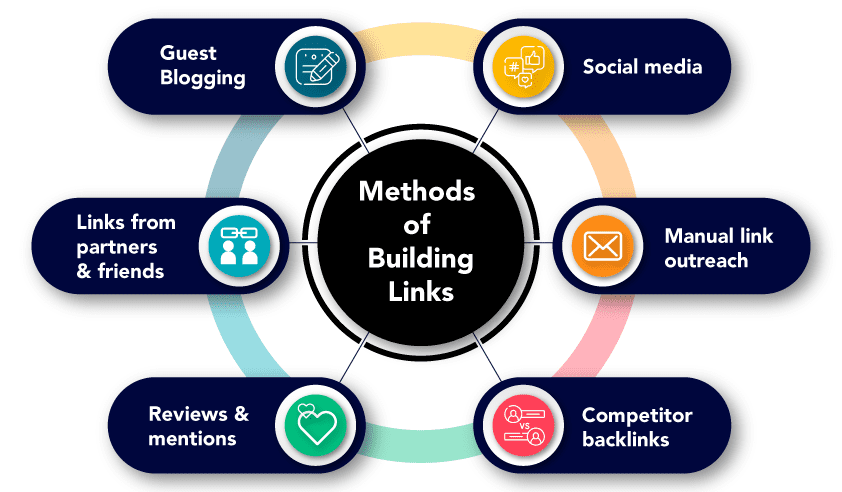
Earn a handful of real links before chasing volume
For a brand-new site, five links from real, topically relevant sites you can name and defend outperform fifty from directories, low-quality guest-post networks, or PBNs — both because Google’s spam systems have gotten measurably better at devaluing manipulative link patterns (see Tactic 8) and because a small number of relevant, editorially-earned links is a stronger trust signal than a large number of generic ones. The realistic path for a zero-DA site: original data or a genuinely useful free tool that other sites want to cite, direct outreach to people who’ve written about adjacent topics, and contributing real expertise to roundups and expert-quote requests (HARO-style platforms) rather than mass link requests.
Tactic 14 / Maintenance
Audit and republish before you publish more
Content decay — a page’s traffic declining over time as information ages or competitors improve — is normal and expected, not a penalty. The mistake new sites make is treating “publish more” as the only lever. Before adding a 21st page, check your existing 20 in Search Console: which ones lost more than 30% of impressions over the last 90 days? Update those first — refreshed statistics, corrected outdated claims, expanded thin sections — before writing anything new. A republished page with a genuinely improved lastmod date and real content changes tends to recover faster than a new page starts from zero.
Tactic 15 / The one that matters most
Slow down — the tactic almost nobody takes
This is the piece of advice most “15 AI SEO hacks” articles skip, because it doesn’t sell a tool, a template, or a quick win — and it’s the one we think matters most. If Tactic 2’s site-wide quality ratio model is even roughly right, then a new site’s biggest single risk isn’t publishing too slowly. It’s publishing faster than it can maintain a genuinely high ratio of useful-to-mediocre pages. Every thin, rushed, or AI-templated page you add doesn’t just fail to help — it’s a data point the classifier weighs against the pages that are good.
We admit this is a mistake we’ve made ourselves: an earlier phase of content production on a sister property published faster than our editorial review process could actually verify claims, and we spent more time later fixing pages than we would have spent getting fewer pages right the first time. The unpopular take that follows from this: if you can only credibly write and verify two genuinely good pages a week, two pages a week is your publishing cadence — not ten.
Fig. 1 — A qualitative model, not measured data: this illustrates the practitioner-observed pattern discussed in Tactic 2, not a Google-published curve or specific numbers from any real dataset.
Fig. 2 — Verified against Google’s Search Status Dashboard as of September 17, 2026. See Tactic 8 for the source table.
How to test any of this on your own site
Rather than invent case studies we can’t independently verify — which conflicts with the sourcing standard this article holds itself to — here’s a self-testing method you can run in under a week: pull your 20 lowest-performing pages by impressions from Search Console, sort by publish date, and check what share were written to a template versus researched individually. If the low performers skew heavily templated, that’s a data point for Tactic 2 on your own site, not someone else’s. It’s slower than reading a case study, but it’s your data, not ours.
Frequently asked questions
How long before a zero-DA site sees any organic traffic?
Realistically 4–8 months for meaningful traffic, and that range depends heavily on competition in your niche and whether you’re targeting genuinely low-competition long-tail queries first. Sites promising faster timelines are usually describing branded or near-zero-competition terms, not competitive commercial queries.
Does AI-written content get penalized by Google?
No — not for being AI-assisted specifically. Google’s stated policy is that content produced primarily to manipulate rankings is a violation regardless of who or what wrote it, while genuinely helpful AI-assisted content is not penalized for that reason alone. The distinction is manipulative intent and reader value, not authorship tooling.
Is llms.txt worth setting up for a new site?
For Google Search specifically, no — Google has stated directly that Search ignores it. It may be worth a low-cost addition if you run developer-facing documentation that other AI tools reference, but don’t expect any Google ranking or AI Overview effect from it. See Tactic 10.
What’s the difference between a core update and a spam update?
A core update recalibrates how Google broadly weighs site quality and relevance — recovery usually requires ongoing content-quality improvement. A spam update enforces specific named policy violations — recovery usually requires finding and fixing a compliance problem. See the table in Tactic 8.
Do backlinks from Reddit or forums help rankings?
Not directly — these links are nofollow and Google has confirmed Reddit receives no special ranking preference. The value is brand visibility and referral traffic, not link equity. See Tactic 12.
How many pages should a new site publish per week?
There’s no universal number, but the framework in Tactic 15 argues for capping output at whatever pace your editorial process can genuinely verify and research properly — for most solo operators or small teams, that’s 1–3 pages a week, not 10.
Should I prioritize Core Web Vitals for a content site with no e-commerce?
Yes, though the ceiling on impact is lower than for transactional sites. INP and Largest Contentful Paint issues on a content site usually come from render-blocking ads or embeds, and fixing them is low-effort relative to content work, so it’s worth doing early rather than treating it as optional polish.
Is guest posting still a viable link-building tactic in 2026?
Selectively — a genuine guest post on a topically relevant, editorially real site is fine. Mass guest-posting through paid networks or link-insertion services is squarely inside Google’s link spam policies and carries meaningfully more risk after three 2026 spam updates than it did a few years ago.
Does this article’s advice apply outside the US / English-language search?
The 2026 spam and core updates referenced here rolled out globally across all languages according to Google’s Search Status Dashboard, so the structural guidance applies broadly. Some specifics — like Reddit’s role in US search results — are more US-centric and may carry less weight in markets where Reddit has lower usage.
Correction ledger
We log corrections instead of silently editing. Struck-through text is what the article said before; the line below it is the current, verified version.
September 17, 2026
Tactic 8 (algorithm timeline): Referenced a “January 2026 Link Spam Update” as part of the 2026 update timeline.
No such update appears on Google’s Search Status Dashboard. Removed the reference and rebuilt the timeline from confirmed dashboard entries: February Discover Core Update, March spam update, March core update, May core update, June spam update, and August spam update.
September 17, 2026
Tactic 4 (entity authority): Described the February 2026 update as a general-search shift toward topic-level entity authority.
Corrected: the February 5–27, 2026 update was scoped specifically to Google Discover, not general Search results. The entity-clarity advice itself stands as general best practice, but the Discover update isn’t evidence for a general-Search ranking shift.
September 17, 2026
Tactic 2 (quality ratio): Tagged the domain-level “helpfulness ratio / quality multiplier” claim as Established.
Downgraded to Probable. Google confirms it evaluates sites holistically via the Helpful Content System, but the specific “ratio” or “multiplier” framing is a practitioner interpretation of that system’s effects, not language Google itself uses.
About this article
This piece is produced and maintained by the seohack.info editorial process: claims are checked against primary sources (Google’s own documentation and Search Status Dashboard) before publication, confidence-tagged by evidentiary status, and revisited on a scheduled basis rather than left to go stale. Where we can’t verify a claim to a standard we’d stand behind, we either label it Speculative or leave it out — including declining to include invented case studies or unverifiable named examples, even where a punchier version of this article would have used them. Corrections are logged, not hidden. Questions or a correction to suggest: use the site’s contact page.
Primary sources checked for this update: Google Search Central documentation (“Clarifying guidance on llms.txt files,” June 15, 2026), Google’s Search Status Dashboard, and update-timeline reporting cross-referenced via Search Engine Roundtable and Search Engine Land. Figures in Fig. 1 are an illustrative framework, not measured data.